

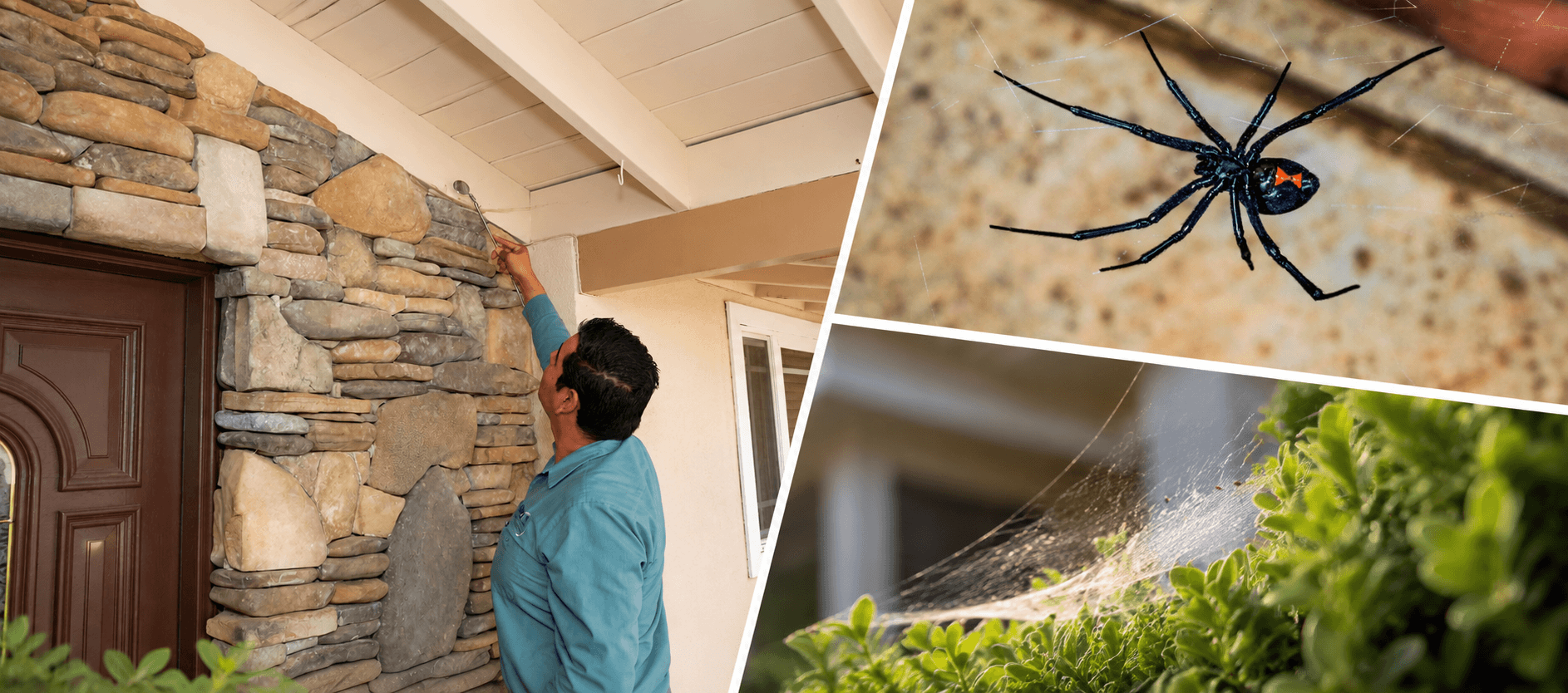
First a resident emails about a spider that scurried away as she unlocked her mailbox. Then another email complains about a run-in with a sticky spider web on the pool gates. Before long, someone on the board has heard about webs stretching over bushes near the clubhouse, making common areas look neglected.
When spiders have moved in, so do the complaints from residents to HOAs. Although small and quick to hide, spiders have a compelling presence. Their webs can be large or small, wispy or silky, and built on walls and posts, atop bushes, or across paths where residents walk. Spiders build egg sacs -- papery and thin or round and puffy -- around the property, unsightly reminders that spiders will repopulate their habitats: in garages, around pools, along walkways, near mailboxes, around clubhouses, in trash enclosures and covering lighting fixtures.
For HOAs, routine inspections can identify problem areas before residents notice them. Residents might not be aware that the way they pile their recycled cardboard by the trash or leave the cans open might attract spiders, for example. For HOAs that want to head off the complaints before they come, an inspection by a qualified pest control technician can pinpoint signs of multi-legged visitors and suggest a plan to deal with them.
How An HOA Can Reduce Spider Problems
Many spider complaints begin in common areas where landscaping, lighting, moisture and insect activity create ideal conditions. Here are 5 ways HOAs like yours can reduce spider complaints:
- Conduct routine inspections
- Trim landscape bushes and trees away from buildings
- Maintain landscaping to reduce hiding places
- Evaluate exterior lighting
- Remove webs and egg sacs Regularly
- Provide preventive pest services
One of the big mistakes HOAs make is that they remove spider webs but never address why they’re showing up in the first place. HOAs keep removing webs as part of their routine maintenance only to find out they’re back only a few days later. That’s because webs aren’t the real problem. They’re a sign that spiders are finding favorable conditions to live somewhere around the property.
The most effective long-term solution is identifying and correcting those conditions with a professional inspection before spider activity spreads throughout your HOA. Why? Because a professional inspection goes beyond removing visible webs. It identifies the areas where spiders are likely to hide, reproduce, and rebuild. Dealing with the cause instead of treating the symptoms can reduce those recurring complaints
When Spider Activity Becomes a Safety Concern
Most common spiders, such as the wolf spider and the house spider, are harmless. But the black widow and brown recluse are two that HOAs might want to be aware of. Their bites are painful and can sometimes send people to the hospital. Some residents might be familiar with them and be wary, but others might be surprised by them and not know how to act.
A black widow sports a shiny black body about an inch and a half long and a startling red hourglass shape on its belly. They mostly live outdoors in cluttered areas or piles of wood, leaves, or trash, and near garages, fences, and shacks. They can be found in yard equipment or underneath dusty outdoor furniture, but sometimes in cluttered areas of basements and attics. Black widow webs are irregularly-shaped and placed, like egg sacs, in sheltered locations. Their webs are usually low to the ground or under things.
Brown recluse spiders are no bigger than a half inch, sometimes have a dark violin shape on their backs, and live in dark undisturbed places. This can mean rocks and logs and pieces of bark. Or inside, cracks and crevices in wallboards.
Both black widows and brown recluse spiders are nocturnal, meaning they come out at dusk or later.
No More Resident Complaints
Residents rarely notice when pest management is working. They notice when it isn't. As a property manager, having routine inspections and a proactive pest management program for your HOA will help you keep common areas looking well-maintained, reduce recurring complaints and give your board confidence that another preventable issue isn't waiting around the corner.





Submit a Comment